
Moving in Docklands
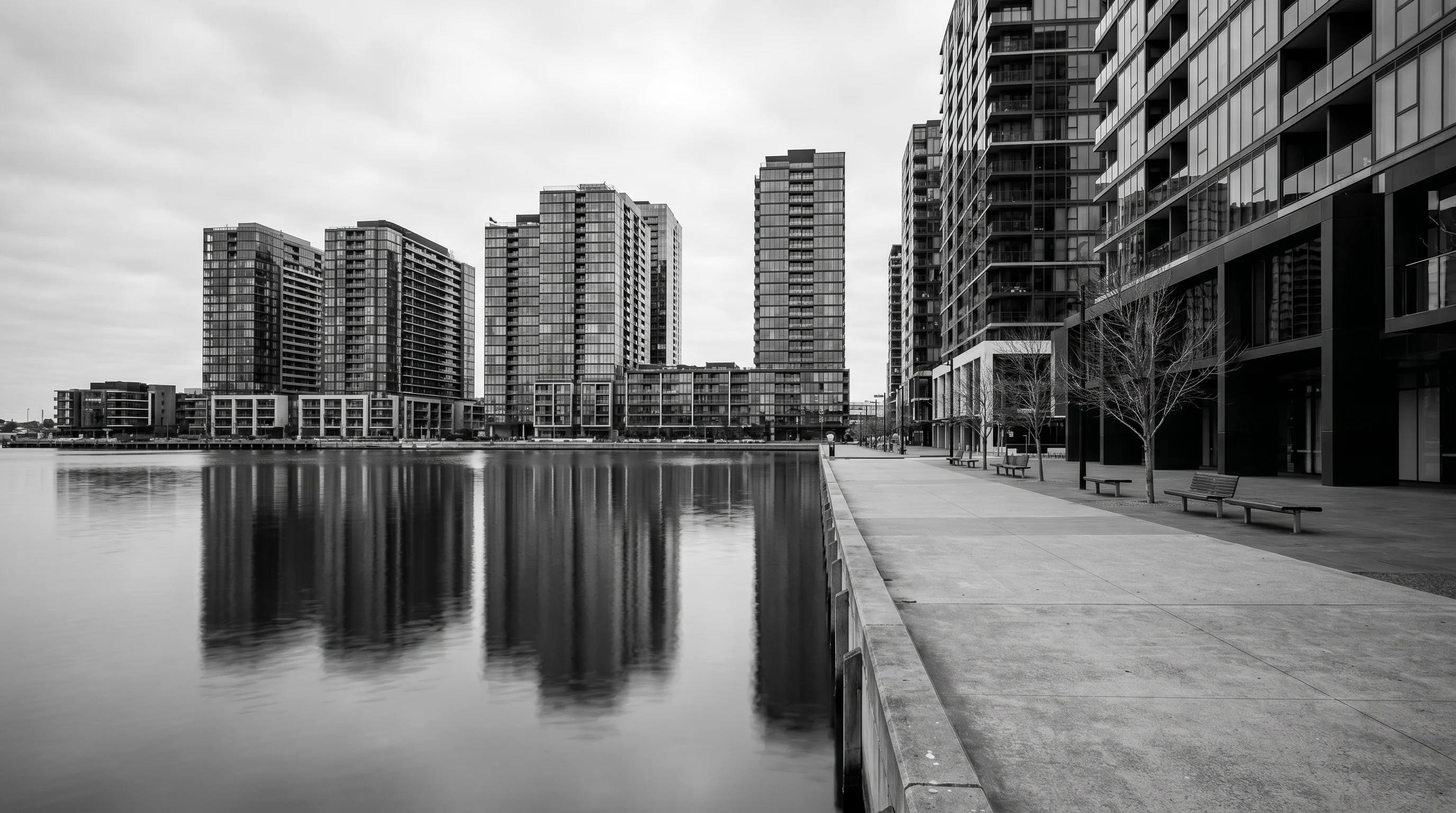
Docklands was built on reclaimed industrial dock land from the late 1990s, and the whole precinct was designed around pedestrians and trams, not removalists. The apartments are in waterfront towers arranged around Victoria Harbour and the free-tram-zone extension, and each building funnels its deliveries through a single basement dock or vehicle court with allocated windows. There is no street-front access for goods vehicles: the public realm is shared pedestrian and tram space, and trucks are directed entirely below-grade or into designated dock entries. Building managers here enforce their loading-dock rules carefully, the owners corporation requires insurance in advance, and a booking that overstays its slot may close the dock for the next move. We confirm the ramp grade and clearance height before the day, several Docklands basements have tight entry conditions.
What decides a move here
Booking reality Building manager allocates dock windows; certificate of currency required in advance; no street loading possible.
- Reclaimed-dock precinct (developed from late 1990s): goods vehicles directed to basement docks, no street loading
- Tram-zone public realm means no truck access to the harbourside, everything goes via building dock entry only
- Several Docklands basement ramps have restricted clearance heights, we confirm truck-fit before the day
- Active owners corporations enforce strict booking windows and require insurance documentation in advance
Send the pickup and drop-off addresses with your quote, plus the floor and lift if you know them, and we will map the access, the booked window and the carry before move day.
Parking and loading zones in the City of Melbourne
The City of Melbourne does not issue a one-day removalist or tradesperson street-parking permit. The relevant on-street permit the council does offer is a construction parking permit, which requires a minimum six-month term and is designed for building sites, not moves. The realistic loading plan is a City of Melbourne loading zone combined with your building's own dock booking. Loading zones in the CBD default to a 30-minute limit for eligible commercial vehicles (goods or G-class with appropriate signage), and the vehicle must be actively loading, not parked. Many loading zones convert to two-hour general parking after 4pm. Clearways within 20 kilometres of the CBD are tow-away zones during posted times, so we confirm the clearway status of every relevant street before the truck moves. For buildings with a dedicated dock, the dock booking is the plan; the loading zone covers the street side of the shuttle.
Our Docklands removal services
Apartment & Home Removals
Whole-home moves through the loading dock and the goods lift, not the street.
Office & Commercial Moves
After-hours and weekend CBD office relocations around your dock window.
Single Items & Heavy Lifts
One sofa, a piano, a fridge, through the goods lift or up the bluestone stairs.
Packing & Unpacking
Pro packing and quality cartons, timed to your dock or lift window.
Interstate Removals
Moving on from Melbourne: Sydney, Brisbane, Canberra and beyond.
Storage Solutions
Short or long-term storage when settlement and lease dates do not line up.
Docklands removals: common questions
Can you park a truck on the street in Docklands?
No. The Docklands public realm is designed for pedestrians and trams, and goods vehicles are directed to building basement docks or vehicle courts. There is no street-front loading access in the waterfront precinct. Every Docklands move routes entirely through the building dock, so the dock booking and vehicle clearance check are the starting point, not an afterthought.
What are the loading dock clearances in Docklands buildings?
Clearance heights and ramp grades vary building to building and several Docklands basements have tighter-than-average entry conditions. We ask for the specific building's dock specifications before the day, including entry height, ramp gradient and loading-bay length, and match the truck to those dimensions. If you have access to your building manager's dock guide, send it to us when you enquire.
How much notice does the Docklands building manager need for a move?
Most Docklands towers want a minimum of five to seven business days notice for a move, and busier buildings or peak periods may require two weeks. Owners corporations here are comparatively active and enforce booking rules carefully; a booking that overstays its dock window can create problems for the next move scheduled in. We book with as much lead time as possible and keep building management updated if anything changes.
How much does a Docklands move cost?
Our rates are $250 per hour for two movers and a truck, $350 for three movers and a truck, and $500 for four movers and two trucks, and you get a clear indicative quote up front for your specific move.